

Job Loss, My Friend
Two times. Both times, I came back intact.
A punch in the chest. A scramble. A recalibration. And then, eventually, the climb back. My formula worked. Update the résumé. Work the network. Take the call. Land the next role.
I wouldn’t bet on it today. Not because I’m too old. Not because I think ageism will eat me alive, though it will try. I would hesitate because we are no longer in the same experiment.
This is a new chemical reaction. A new test tube. And AI is the confounding ingredient nobody has fully measured yet.
The Old Map
For three decades, the formula my parents handed down was simple. Get a degree. Get a job. Stay long enough to get promoted. Save in a 401(k). Retire at 65.
That one never quite worked for me. By the time I started, the world it was built for was already cracking. Companies stopped keeping people. Skills aged faster. Titles meant less.
So I built my own. Hustle. Reinvent. Hop industries before they hopped me. Build relationships that travel. That formula worked. Twice it brought me back.
Now I’m watching the second formula crack the same way the first one did.
The Tax You Don’t See On Your Paystub
Most careers are quietly taxed. Not by the IRS, but by a slow, compounding loss of optionality, leverage, and ownership.
It doesn’t show up on a paystub. It shows up twenty years later, when you look up and notice the people who once stood next to you have built things, while you’ve built a résumé.
A salary is a rented life. Wages are taxed at the highest rates, end the day you stop working, and depreciate to zero on day one of unemployment. Every year you spend earning only wages is a year you didn’t build something you actually own. An audience, a piece of IP, a small business, equity in something that isn’t your employer’s stock plan, a reputation that travels with you when the role doesn’t.
That gap between earning and owning is the compound tax. Most people pay it for forty years and never know.
Three Old Rules That Are Now Traps
The playbook hasn’t just aged. It has quietly reversed.
1. “Specialize deeply.”
In a stable world, depth was protection. Today, depth in a single skill is a target. The narrower you are, the easier you are to replace. The new safety lies between fields, not inside one.
2. “Be loyal.”
Loyalty was rewarded when companies treated workers as long-term assets. They don’t anymore. The numbers are blunt: the median pay bump for staying is around 3%, for switching, it’s 14 to 15%. Loyalty without ownership is unpaid devotion.
3. “Climb the ladder.”
Ladders work when the building stands still. The building is being rewired while you’re on it. A title is a bet that the role you hold will still exist in ten years. A lot of them won’t.
The Confounding Variable
And then there’s the new ingredient in the test tube.
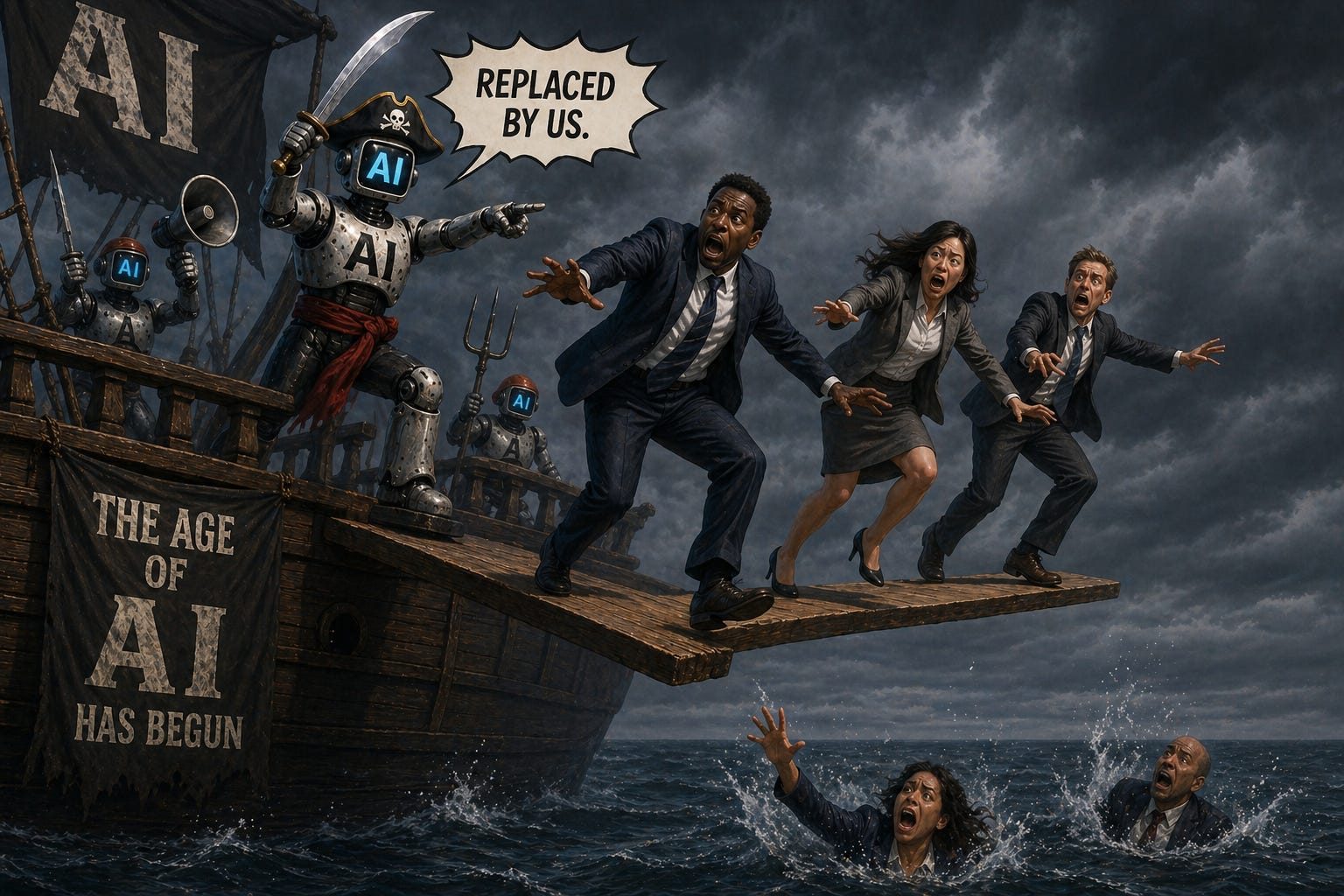
The simple question worth sitting with: do we really think the career formula that worked in 1995 still works in 2026, when the same technology sold to us as humanity’s great uplift is being used, this quarter, to lay off hundreds of thousands of people at the very companies selling it?
The press release announcing the AI revolution and the press release announcing the layoffs were written by the same communications team. They go out the same week. Nobody flinches.
We are told to “embrace AI” and “upskill.” Fine. But ask the obvious follow-up: who is doing the embracing, and who is being embraced? When a CEO says AI will free us up to do “higher value work,” which “us” is being freed, and which “us” is being freed from a job?
The compound tax was used for over forty years. AI didn’t change the tax. It compressed the timeline. What used to bankrupt people slowly now does it in five.
That is why I would hesitate today, where twice before I didn’t.
Build Things You Own
If wages are taxed, automatable, and replaceable, and they are, the only honest response is to start building things you actually own.
An audience. A piece of intellectual property. A side practice. A small business. A reputation that travels when the role doesn’t.
None of this requires quitting tomorrow. It requires admitting two uncomfortable things: your job is not your career, and your salary is not your wealth.
The Closing Question
The people who will do well over the next ten years aren’t the ones who learn the most prompts. They are the ones who use this moment to stop renting their lives back to themselves, one paycheck at a time.
If the same people promising AI will uplift humanity are, this quarter, laying off humans at scale, which part of that promise are you still buying?
And what would you do differently this year if you stopped?